
A serrated bread knife does one thing well: cut foods with a hard exterior and soft interior — artisan bread, sourdough, brioche, bagels — without crushing the crumb. It also handles tomatoes, citrus, and layered cakes cleanly. You need exactly one.
The key difference is tooth shape and blade length. Pointed serrations cut more aggressively and are easier to sharpen (with a ceramic rod or tapered sharpening steel) than scalloped serrations. Longer blades (10"+) clear a full sourdough boule in one stroke; shorter blades require sawing.
As an Amazon Associate we earn from qualifying purchases. Some links are affiliate links — if you buy through them we may earn a small commission at no extra cost to you.
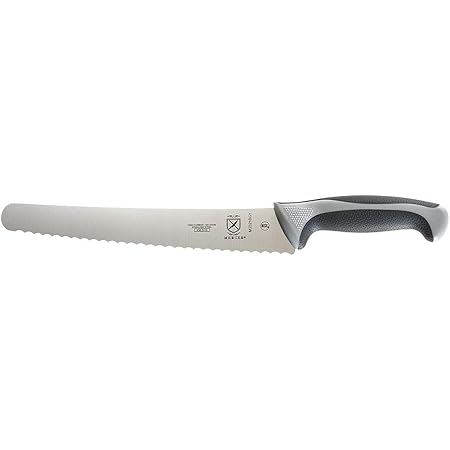
Mercer Culinary 10" Millennia Bread Knife
~$25
- 10" blade
- High-carbon German steel
- Ergonomic handle
- NSF-certified
Best for: First serrated knife, commercial kitchens
Solid stamped knife used widely in restaurant kitchens for prep work. Good length for most loaves and a sharp enough factory edge to last years with occasional honing.
Shop on Amazon →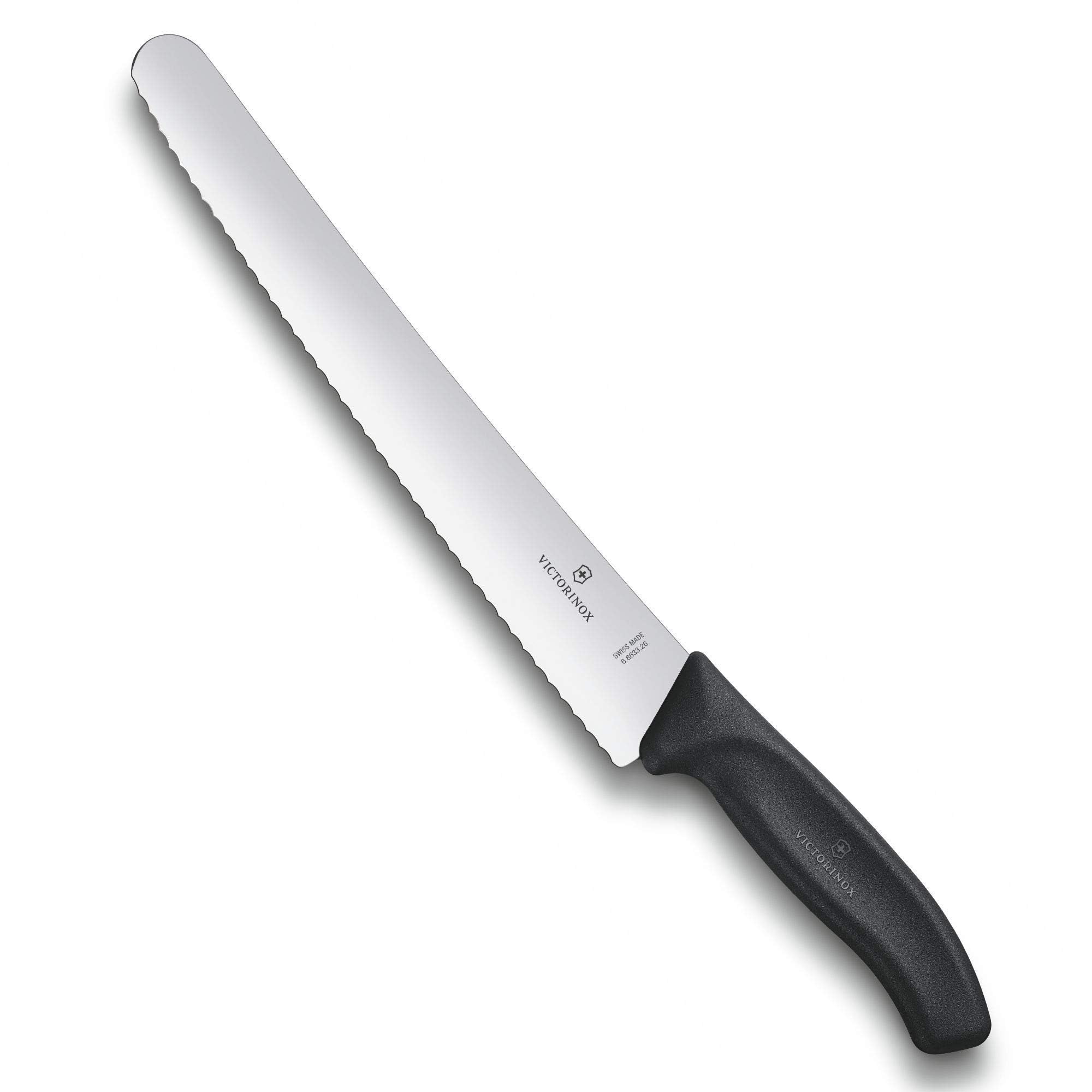
Victorinox Swiss Classic 10.25" Serrated Bread Knife
~$40
- 10.25" curved blade
- Swiss stainless steel
- Comfortable handle
- Pointed serrations (sharpenable)
Best for: Most households — outperforms its price class
Regularly beats knives at 3x the price in bread-cutting tests. The long curved blade clears a full boule in one stroke. Pointed serrations stay sharp longer and can be touched up with a ceramic rod.
Shop on Amazon →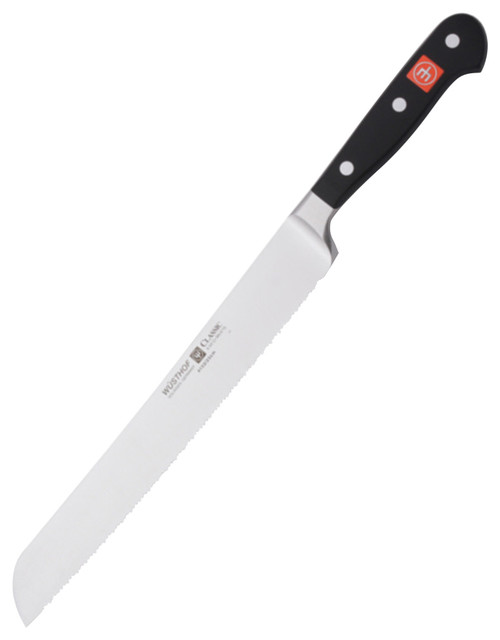
Wüsthof Classic 10" Double Serrated Bread Knife
~$160
- 10" forged blade
- Double serration for finer cutting
- Full bolster
- Lifetime warranty
Best for: Matching a Wüsthof set, lifelong ownership
Double serration creates a finer, more controlled cut through delicate crumb structures. Forged construction gives a noticeably better feel than stamped knives at this size. Justified only if matching a Wüsthof collection.
Shop on Amazon →